


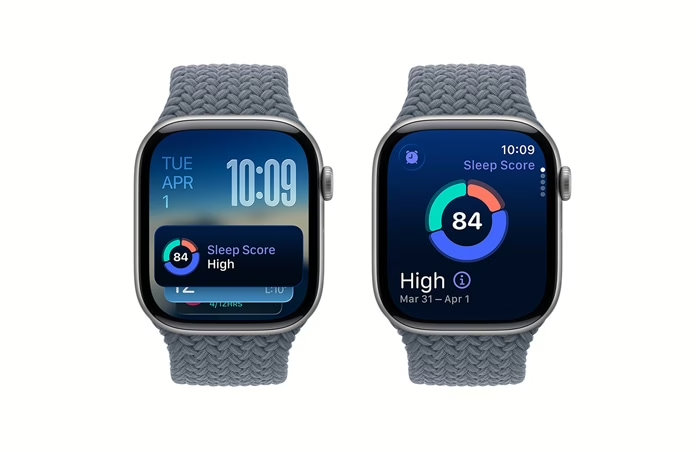
Apple announced that the US FDA has granted clearance for a groundbreaking new feature on the Apple Watch that will enable users to monitor hypertension risk remotely. This marks a major step forward for wearable health and highlights the growing role of consumer devices in transforming remote patient monitoring (RPM). The RPM market has become an integral part of the healthcare paradigm for patients globally, and it will continue to grow significantly, says GlobalData, a leading data and analytics company.
The feature, available on Apple Watch Series 9, 10, 11, and Ultra 2 and 3 models, uses the device’s optical heart sensor to measure vascular responses over a 30-day period. The long-term monitoring capability provides more accurate insights into the risk of developing hypertension, a chronic condition affecting almost half of US adults. The function will be rolled out in over 150 countries soon.
Alexandra Murdoch, Senior Medical Analyst at GlobalData, comments: “Hypertension typically develops without obvious symptoms and can lead to heart disease, stroke, and kidney failure if left untreated. The ability to continuously monitor blood vessel health from the wrist is a breakthrough for patients and healthcare professionals. The FDA’s decision reflects a growing recognition that connected devices are no longer peripheral to healthcare delivery, they are central to it. This validation paves the way for broader adoption of wearables as trusted tools in patient monitoring.”
The RPM market has grown rapidly in recent years as healthcare systems look for ways to reduce costs, increase patient engagement, and manage chronic diseases outside of hospital walls.”
GlobalData forecasts the RPM market will reach $13.6 billion by 2033, a 1.1% CAGR due to the mature state of the market. Devices like the Apple Watch now act as medical-grade tools that support earlier intervention, empower patients to take control of their health, and provide healthcare professionals with real-time data to inform treatment decisions.
While consumer wearables have long included features such as heart rate tracking and fitness monitoring, FDA clearance signals a higher threshold of clinical reliability. For healthcare providers, this development underscores the readiness of wearable devices to be integrated into RPM programs, particularly in cardiology and primary care.
Murdoch concludes: “The approval arrives at a pivotal time for the US healthcare system. Rising rates of hypertension and cardiovascular disease are straining providers, and RPM offers a scalable solution. For patients, the feature provides actionable feedback without the need for specialized equipment or frequent physician visits. For healthcare providers, it delivers continuous streams of data that can reveal early warning signs before complications arise.”